
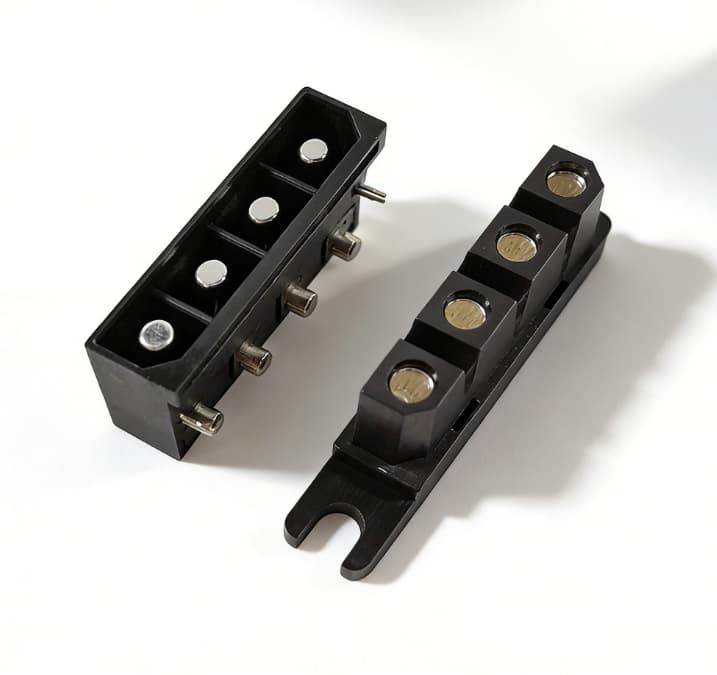
What Makes Heavy Duty Battery Cable Connectors More Reliable Than Standard Connectors?
Power systems fail most often at connection points. Loose or weak connectors cause resistance, heat, and voltage loss. Therefore, connector choice directly affects system reliability. Heavy duty battery cable connectors support stable current flow. They reduce failures under load. This reliability matters in critical power environments. This article explains why heavy-duty connectors outperform standard designs.
Why Standard Battery Connectors Often Fail
Limited Current Capacity Creates Risk
Standard connectors suit light-duty applications. However, high current loads exceed their design limits. As a result, overheating becomes common. Thermal stress weakens contact surfaces. Voltage drop increases. System efficiency declines quickly. Heavy-duty battery cable connectors eliminate these risks.
Mechanical Weakness Under Harsh Conditions
اهتزاز, moisture, and corrosion affect standard connectors. These factors loosen terminals over time. Therefore, failures increase in industrial environments. Heavy-duty designs resist movement and environmental damage. Choose the APLUSPOWER for stable performance.

Core Design Differences Explained
Thicker Conductive Materials
Heavy-duty connectors use thicker copper or alloy conductors. This design lowers resistance significantly. Consequently, power transfer remains efficient. High current battery connectors maintain consistent performance. Energy loss stays minimal.
Enhanced Contact Surface Area
Larger contact areas improve electrical continuity. Pressure is distributed evenly across terminals. This feature reduces localized heating. Standard connectors lack this structural advantage.
Performance Advantages of Heavy Duty Battery Cable Connectors
Superior Heat Management
Heat causes connector degradation. Heavy-duty designs dissipate heat more effectively. As a result, connectors operate safely under continuous load. Lower temperatures extend connector lifespan. Reliability improves across operating cycles.
Stable Connections Under Vibration
Industrial systems experience constant movement. Heavy-duty connectors include reinforced housings and secure fasteners. These features prevent loosening. Electrical continuity remains uninterrupted.

Safety and Compliance Benefits
Reduced Arc and Spark Risk
Loose connections create sparks. Sparks increase fire risk. Heavy-duty battery cable connectors maintain firm contact consistently. Safety improves in high-current environments. Maintenance teams face fewer hazards.
Compliance With Industrial Standards
Many heavy-duty connectors meet strict electrical standards. These certifications support use in demanding applications. Industrial battery cable connectors protect long-term investments.
Heavy Duty vs Standard Connectors:
| Feature | Heavy Duty Connectors | Standard Connectors |
|---|---|---|
| Current Capacity | High | Limited |
| Heat Resistance | Excellent | Moderate |
| Vibration Tolerance | Strong | Weak |
| Contact Area | Large | Small |
| Service Life | Long-term | Shorter |
Application Scenarios That Demand Heavy Duty Connectors
Energy Storage and Battery Banks
Battery banks handle high current continuously. Connector reliability determines system stability. Heavy-duty battery cable connector ensure consistent power delivery. Choose the APLUSPOWER for energy storage systems.
Industrial Machinery and Equipment
Manufacturing equipment demands a stable electrical supply. Connector failures cause costly downtime. Heavy gauge battery connectors support uninterrupted operation.
Automotive and Off-Grid Systems
Commercial vehicles and off-grid systems face vibration and harsh conditions. Heavy-duty connectors resist these stresses effectively.
How to Select the Right Heavy Duty Connector
Check current rating and cable compatibility. Evaluate insulation quality and fastening method. Ensure connectors support environmental exposure. APLUSPOWER delivers precision-engineered connectors for demanding applications. Performance remains consistent over time. Avoid undersized connectors, poor insulation materials, and connectors without strain relief. Proper selection prevents failures and maintenance issues.

Why Heavy Duty Battery Cable Connectors Matter
Reliable power systems depend on strong connections. Heavy-duty battery cable connectors provide durability, safety, and efficiency. They outperform standard connectors in high-current environments. For dependable electrical performance, choose the APLUSPOWER.
FAQ:
1. Do heavy-duty battery cable connectors reduce voltage drop?
Yes. Lower resistance improves voltage stability significantly.
2. Are heavy duty connectors suitable for outdoor use?
Yes. Quality insulation resists moisture and corrosion.
3. How long do heavy-duty connectors typically last?
They last for many years under proper installation.


حول المؤلف
