
Why Are Flame-Retardant Busbar Insulators Important for Data Centers and Industrial Power Systems?
Modern data centers require robust electrical insulation components to maintain continuous high-voltage power distribution safety today. Furthermore, inferior electrical mounts trigger thermal breakdown, causing severe short circuits across industrial switchgear systems. Today, installing a flame retardant insulator prevents catastrophic electrical fires while maintaining high dielectric isolation performance. Consequently, power distribution engineers enhance operational safety while ensuring lead-free compliance across international UL and RoHS certification standards.
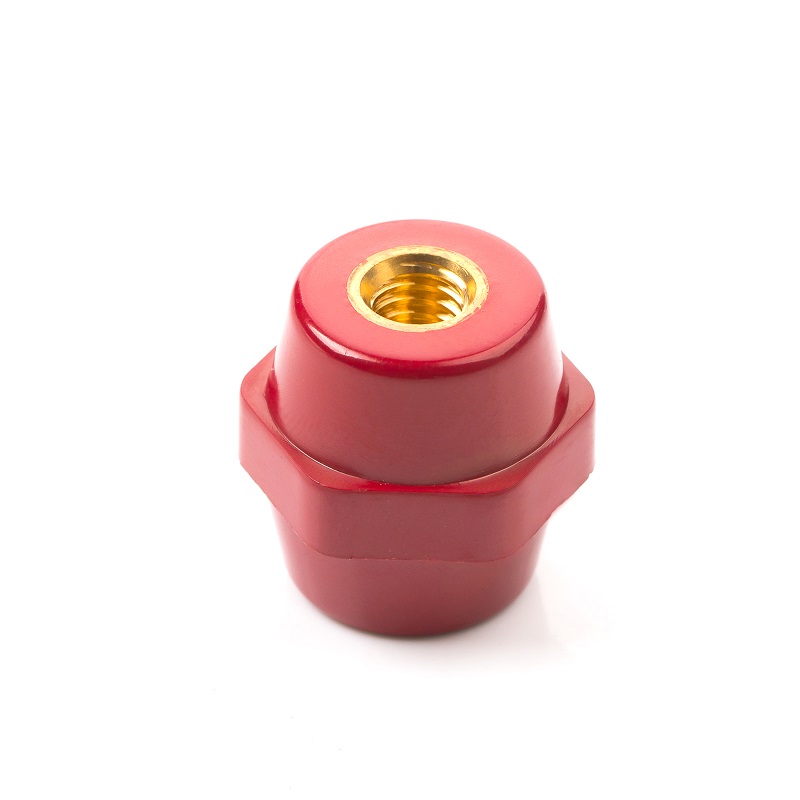
Our high-strength DJY-34 standoff support insulators deliver exceptional flame resistance for mission-critical industrial electrical equipment. Therefore, power distribution builders replace weak plastic supports with ultra-durable BMC and PF resin insulators. Specifically, our DJY-34 insulator features precision M6 threaded inserts with a 3000V AC withstand rating. Explore our product-category for specialized busbar insulators and custom high-voltage standoff support solutions.
In addition, advanced compression molding ensures high bending strength and mechanical torque resistance up to 60 Nm. Consequently, heavy copper busbars remain securely mounted during high-current fault surges without fracturing surrounding isolation barriers. Furthermore, wide thermal endurance from -30°C to +125°C guarantees continuous reliability inside hot data center power rooms.

Power System Bottlenecks: Resolving 4 Mechanical and Isolation Issues
Industrial power engineers face thermal degradation, mechanical vibration damage, arc flash risks, and electrical tracking failures. Below, we examine four primary switchgear insulation challenges and our technical standoff support solutions.
Thermal Insulation Degradation and Fire Risks in Data Centers
Continuous high-current electrical loads generate extreme heat across dense copper busbar distribution networks inside server facilities. Specifically, low-grade plastic insulators soften under high temperatures, losing structural strength and triggering arc flash fires. Therefore, high-density data center switchgear demands self-extinguishing isolation materials with high thermal resistance ratings. Consequently, deploying a flame retardant insulator prevents electrical fire propagation across critical power distribution cabinets.
Example: A hyperscale server facility suffers an electrical flashover when cheap busbar mounts melt under continuous peak demand loads. Thermal degradation causes adjacent copper bars to touch, destroying critical power distribution panels and forcing prolonged server downtime. Check our technical-guide for busbar insulator selection criteria and thermal safety standards.
In contrast, our DJY-34 standoff insulator utilizes premium UL94 V-0 rated Bulk Molding Compound (BMC) resin materials. Furthermore, excellent flame-retardant properties prevent active combustion and stop flame spread during severe electrical overload events. Thus, data center operators protect sensitive server racks while maintaining high operational safety margins continuously.
Busbar Displacement Caused by Severe High-Current Dynamic Forces
Sudden short-circuit faults generate immense electrodynamic forces that pull and twist heavy copper busbars inside switchboards. Specifically, weak standoff mounts snap under high mechanical bending stress, allowing live conductors to short against grounded metal enclosures. Therefore, industrial power distribution networks require heavy-duty standoff insulators engineered for high mechanical torque resistance. Consequently, installing a high support standoff insulator stabilizes heavy busbar runs against severe electrodynamic forces.
Example: A steel mill power distribution panel experiences a sudden short circuit that generates massive dynamic repulsive forces across phase conductors. Substandard plastic busbar supports crack instantly, throwing live 600V copper bars directly against the grounded steel cabinet wall. In contrast, DJY-34 insulators offer high mechanical strength with torque ratings up to 60 Nm.
Additionally, precision-threaded M6 steel inserts distribute mechanical loads evenly across the BMC insulating body during heavy vibration. Furthermore, high tensile and bending strength prevents structural cracking during violent short-circuit mechanical surges. As a result, industrial switchgear builders protect critical power infrastructure while ensuring long-term physical equipment stability.
Electrical Tracking and Dielectric Breakdown in Damp Conditions
Dust accumulation combined with ambient humidity creates conductive tracking paths across traditional smooth-walled insulator surfaces. Specifically, electrical creepage causes insulation flashovers, tripping circuit breakers and interrupting vital manufacturing operations unpredictably. Therefore, high-voltage industrial distribution boards require high insulation resistance materials with extended creepage paths. Consequently, deploying a busbar insulator restores high dielectric isolation under harsh environmental operating conditions.
Example: A coastal manufacturing plant suffers frequent electrical trips when high humidity causes surface tracking across main busbar supports. Electrical arcing degrades insulator surfaces, requiring frequent emergency shutoffs for panel cleaning and part replacements. In contrast, DJY-34 insulators deliver a high insulation resistance rating exceeding 500 MΩ.
Additionally, superior dielectric strength withstands high testing voltages up to 3000V AC without experiencing electrical breakdown. Furthermore, non-hygroscopic BMC materials resist moisture absorption, preventing internal electrical degradation in humid environments. As a result, industrial plant engineers achieve stable power distribution while minimizing unexpected electrical maintenance downtime.
Poor Physical Dimensions Causing Switchgear Assembly Misalignment
Irregular insulator heights force installation technicians to shim copper busbar runs manually during complex switchboard assembly. Specifically, inconsistent mounting dimensions introduce severe mechanical strain into copper busbar joints, causing loose electrical connections over time. However, precision-molded standoff supports maintain exact physical dimensions, streamlining panel assembly and eliminating mechanical mounting stress completely.
Example: A switchgear manufacturer encounters assembly delays when variable insulator heights cause misaligned busbar mounting holes across production lines. Forcing misaligned copper bars creates permanent mechanical stress, increasing electrical contact resistance and local joint heating. In contrast, we manufacture DJY-34 insulators with high dimensional accuracy.
Additionally, exact 20mm height dimensions and precise 18x19mm wrench screens ensure fast, uniform bolt torquing during panel building. Consequently, switchboard assemblers build clean, stress-free busbar architectures rapidly without requiring custom shims or manual modifications. Thus, industrial power equipment manufacturers lower production labor costs while maintaining high panel build quality.

Technical Solutions: Precision Engineering for Power Busbar Insulators
Superior busbar isolation systems combine high-grade thermosetting materials, precision threaded inserts, high dielectric strength, and strict international safety certifications. Furthermore, robust compression molding techniques ensure long-term mechanical reliability across demanding industrial environments.
High-Purity Thermoset Materials and Advanced Standoff Architecture
Engineers design DJY-34 standoff insulators using premium Phenolic (PF) or Bulk Molding Compound (BMC) thermoset materials. Specifically, high-density thermoset resins withstand severe mechanical impacts without fracturing or losing dimensional stability over time. Furthermore, non-flammable material formulations prevent toxic gas emissions during high-temperature thermal overload events. Consequently, system integrators rely on an industrial power busbar insulator for mission-critical electrical installations.
In addition, precision M6 internal brass or steel threads provide secure mechanical fastening for heavy copper busbars. Specifically, deep thread engagement prevents thread stripping during high-torque bolt installation across automated switchboard production lines. Consequently, power distribution panels maintain rigid structural alignment under continuous physical and electrical stress.
Strict Safety Certifications and Automated Compression Molding
Our DJY-34 busbar insulators undergo rigorous manufacturing processes to guarantee strict physical tolerance controls across high-volume production batches. Specifically, automated molding presses maintain consistent material density, eliminating internal air voids that cause partial discharge failures. Furthermore, 100% compliant raw materials satisfy global UL and RoHS environmental safety directives. Discover options in our product-category standoff support insulator catalog.
Moreover, every production lot undergoes thorough Hipot withstand testing from 3KV to 8KV before final factory packaging. Thus, electrical control panel builders receive fully certified insulation components ready for immediate installation into high-voltage distribution switchgear. Consequently, power equipment manufacturers maintain high safety standards while streamlining global regulatory compliance approvals.
Product Parameter & Specification Overview
Review key technical specifications comparing standard plastic supports against the DJY-34 High-Support Busbar Insulator.
| Technical Parameter / Feature | Standard Plastic Busbar Support | DJY-34 High-Support Insulator | Power System Safety Advantage & Benefit |
| Material Composition | Standard Thermoplastic (Nylon/ABS) | Premium BMC / PF Thermoset Resin | Prevents Combustion & Resists Extreme Heat |
| Mechanical Torque Rating | Low Torque Limit (15 – 20 Nm) | High Torque Rating (Up to 60 Nm) | Withstands Heavy Mechanical Stress Without Cracking |
| Withstand Voltage Rating | 1000V – 1500V AC Rating | 3000V AC High Withstand Rating | Prevents Electrical Arc Flashover & Breakdown |
| Insulation Resistance | ≤ 100 MΩ Resistance | High Resistance (≥ 500 MΩ) | Eliminates Surface Creepage & Electrical Tracking |
| Operating Temperature | -10°C to +80°C Limit | -30°C to +125°C Extended Range | Operates Reliably in Hot Data Center Cabinets |
| Global Safety Certification | Basic Commercial Approval | Fully Certified UL & RoHS Compliant | Ensures Full Compliance for International Exports |
Versatile Applications in Data Centers and Railway Power Systems
Modern power distribution networks require adaptable standoff insulators that perform reliably across diverse high-voltage application environments. Furthermore, high-strength thermoset insulators perform smoothly across data center distribution units, industrial motor control centers, and high-speed railway power equipment.
For instance, data center infrastructure builders deploy DJY-34 standoff insulators inside main low-voltage power distribution switchboards. Specifically, high thermal stability allows insulators to support heavy copper busbars carrying thousands of continuous electrical amperes. Consequently, data center operators maintain uninterrupted server uptime while protecting facility personnel against electrical arc risks. Learn details in our technical-guide busbar insulation and switchgear safety guide.
Additionally, high-speed railway power equipment manufacturers utilize these insulators to support auxiliary power busbars inside trackside electrical enclosures. High vibration resistance prevents insulator cracking caused by continuous mechanical oscillations from passing high-speed trains. Thus, railway power grids maintain steady electricity delivery without requiring frequent trackside insulator maintenance. Therefore, our busbar insulators successfully merge high dielectric strength, robust flame retardancy, and superior mechanical durability.
About author
